As a supplier of carbon steel grating, I’ve witnessed firsthand how the ductility of this versatile material plays a crucial role in its wide – ranging applications. Ductility, the ability of a material to deform under tensile stress without fracturing, is a key property that influences the performance and suitability of carbon steel grating in various scenarios. Carbon Steel Grating
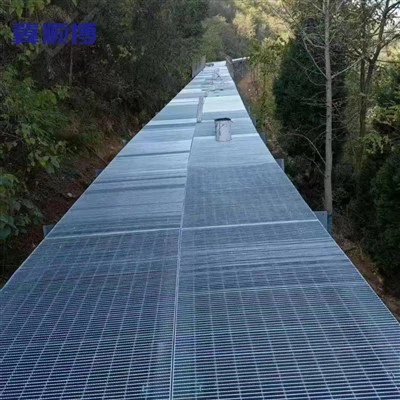
Understanding Ductility in Carbon Steel Grating
Carbon steel is an alloy primarily composed of iron and carbon, with small amounts of other elements. The ductility of carbon steel grating is determined by several factors, including its carbon content, the presence of alloying elements, and the manufacturing process. Generally, lower carbon content in carbon steel leads to higher ductility. For example, mild steel, which has a relatively low carbon content (usually less than 0.3%), is known for its excellent ductility. This allows it to be easily formed, bent, and shaped without breaking.
The manufacturing process also has a significant impact on ductility. Processes such as hot rolling can improve the ductility of carbon steel grating by aligning the grain structure of the steel. During hot rolling, the steel is heated to a high temperature and passed through rollers, which refines the grain size and enhances the material’s ability to deform.
Applications of Ductile Carbon Steel Grating
Construction and Infrastructure
One of the most common applications of carbon steel grating is in the construction and infrastructure sectors. In building construction, ductile carbon steel grating is used for flooring, walkways, and stair treads. Its ability to withstand bending and deformation makes it ideal for these applications. For instance, in a multi – story building, the grating can be installed on mezzanine floors. The ductility ensures that the grating can adapt to the weight and movement of people and equipment without cracking or failing.
In infrastructure projects such as bridges and tunnels, carbon steel grating is used for drainage systems and pedestrian walkways. The ductility of the grating allows it to withstand the dynamic loads caused by traffic and environmental factors. For example, on a bridge, the grating can be installed as a deck surface. The constant movement and vibration from passing vehicles require a material that can deform slightly without losing its structural integrity, and ductile carbon steel grating fits the bill perfectly.
Industrial Settings
In industrial facilities, carbon steel grating is widely used for platforms, catwalks, and machine guards. The ductility of the grating is essential in these applications as it can withstand the harsh conditions and heavy loads. In a manufacturing plant, for example, the grating can be used to create a working platform above machinery. The ability of the grating to bend and deform under load ensures that it can support the weight of workers and equipment without breaking.
Moreover, in chemical and food processing industries, the ductility of carbon steel grating is beneficial for custom – made applications. The grating can be easily cut, bent, and welded to fit specific equipment and spaces. For instance, in a food processing plant, the grating can be shaped to create a custom – designed conveyor system. The ductility allows for precise fabrication, ensuring that the grating meets the exact requirements of the production process.
Marine and Offshore Applications
In the marine and offshore industries, carbon steel grating is used for various purposes, including ship decks, offshore platforms, and oil rigs. The ductility of the grating is crucial in these environments, where it is exposed to harsh weather conditions, saltwater corrosion, and heavy loads. The ability of the grating to deform under stress helps it to withstand the dynamic forces caused by waves, wind, and the movement of equipment.
For example, on an offshore oil rig, the grating is used as a walkway and platform. The constant movement of the rig due to ocean currents and waves requires a material that can flex and adapt without failing. Ductile carbon steel grating provides the necessary strength and flexibility to ensure the safety and functionality of the rig.
Advantages of Ductile Carbon Steel Grating
Enhanced Safety
The ductility of carbon steel grating enhances safety in various applications. In the event of an overload or impact, the grating can deform rather than break suddenly. This reduces the risk of accidents and injuries. For example, in a public building, if a heavy object is dropped on the grating floor, the ductility allows the grating to absorb the impact and distribute the load, preventing it from shattering and causing sharp edges.
Cost – effectiveness
Ductile carbon steel grating is cost – effective compared to some other materials. Its ability to be easily formed and fabricated reduces the manufacturing and installation costs. Additionally, the long – term durability of the grating means that it requires less frequent replacement, resulting in lower maintenance costs over time.
Design Flexibility
The ductility of carbon steel grating offers great design flexibility. It can be easily cut, bent, and welded into different shapes and sizes to meet specific design requirements. This allows architects and engineers to create unique and functional structures. For example, in a modern building, the grating can be used to create an aesthetically pleasing façade or a decorative interior element.
Challenges and Considerations
While the ductility of carbon steel grating offers many advantages, there are also some challenges and considerations. One of the main challenges is corrosion. Carbon steel is prone to rusting, especially in environments with high humidity or exposure to chemicals. To address this issue, the grating can be coated with anti – corrosion materials such as galvanizing or painting.
Another consideration is the balance between ductility and strength. In some applications, a higher strength may be required, which may come at the expense of ductility. Therefore, it is important to carefully select the appropriate grade of carbon steel based on the specific requirements of the application.
Conclusion

In conclusion, the ductility of carbon steel grating is a critical property that significantly affects its applications. From construction and infrastructure to industrial and marine settings, the ability of the grating to deform under stress provides numerous benefits, including enhanced safety, cost – effectiveness, and design flexibility. As a carbon steel grating supplier, I understand the importance of providing high – quality products with the right balance of ductility and strength.
Grating Accessories If you are in need of carbon steel grating for your project, I invite you to reach out for a detailed discussion. We can work together to select the most suitable grating based on your specific requirements, ensuring that you get a product that meets your expectations in terms of performance, durability, and cost.
References
- ASM Handbook, Volume 1: Properties and Selection: Irons, Steels, and High – Performance Alloys. ASM International.
- "Ductility and Formability of Metals" by George E. Dieter. McGraw – Hill.
- "Steel Structures: Design and Behavior" by S. K. Duggal. Pearson Education.
Hebei Shunbo Metal Wire Mesh Manufacturing Co., Ltd.
As one of the most professional carbon steel grating manufacturers and suppliers in China, we’re featured by quality products and good price. Please rest assured to buy high-grade carbon steel grating for sale here from our factory. Contact us for more details.
Address: No.66, Xicheng Avenue, West Zone, Economic Development Zone, Raoyang County, Hengshui City, Hebei Province, China
E-mail: info@steelgratingworld.com
WebSite: https://www.shunbosteelgrating.com/
