If you’ve ever walked through a power plant, a manufacturing facility, or even a large commercial building, you’ve probably seen high voltage switchgear—those robust, metal-clad cabinets that look like something out of a sci-fi movie, humming quietly as they keep electricity flowing safely. As a high voltage switchgear supplier who’s been in this industry for over 12 years, I can’t tell you how many times clients have asked me this exact question: “What’s the price range of high voltage switchgear?” It’s not a simple answer, I get it—every project is different, every site has unique needs, and there’s no one-size-fits-all number. Let me break this down like I would to a contractor who just called me last week, looking to spec out gear for a new solar farm in West Texas. High Voltage Switchgear
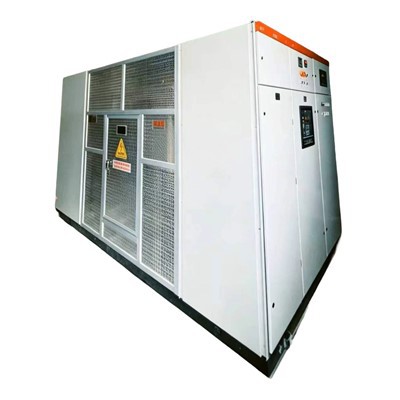
First, I need to set the baseline: high voltage switchgear isn’t a commodity. That’s a common misconception, especially for people who work in industries where equipment is standardized. This gear is custom-engineered to handle specific voltage levels, fault currents, and environmental conditions. So when someone asks about price, the first thing I ask back is: “What voltage do you need? And what’s the fault current rating for your site?” Those two details alone can shift the price by tens of thousands of dollars.
Let’s start with the basics. What counts as “high voltage” here? In the power industry, we generally categorize it as equipment rated for 1 kV (kilovolt) to 52 kV—this is medium to high voltage, where the gear has to be built to contain arc flashes, handle sudden power surges, and disconnect large loads without failing. Above 52 kV, we get into extra high voltage (EHV) switchgear, which is a whole different ballgame. I’ll cover both, but let’s start with the most common range clients inquire about: 12 kV to 38 kV, which is the sweet spot for industrial plants, distribution substations, and small-to-medium renewable energy projects.
For 12 kV switchgear, the entry-level for standard, air-insulated switchgear (AIS)—the most common type, which uses air as the insulating medium between conductors—typically starts around $15,000 to $25,000 per bay. Wait, a “bay” is individual unit in a switchboard, right? That’s important to clarify, because clients often confuse a whole switchgear assembly with a single bay. A small, 2-bay assembly for a warehouse or small substation might run $30,000 to $50,000. But that’s for basic gear: no fancy protection relays, no communication modules, just the barebones to switch power on and off.
If you move up to 24 kV or 38 kV, that entry level jumps. Air-insulated switchgear at 24 kV starts around $22,000 to $35,000 per bay, and 38 kV runs $30,000 to $50,000 per bay. Why the jump? Higher voltage means thicker insulation, larger conductors, and heavier metal enclosures—all of which add material and manufacturing costs. Then there’s fault current rating. A switchgear rated for a 20 kA (kiloampere) fault current is cheaper than one rated for 40 kA, because the latter has to have larger bus bars, stronger circuit breakers, and more robust mechanical parts to handle the force of a sudden fault. That difference alone can add 20% to 30% to the per-bay price.
Now, there’s another type of switchgear that’s super popular now: gas-insulated switchgear (GIS). Instead of air, GIS uses sulfur hexafluoride (SF6) gas to insulate the conductors inside sealed enclosures. It’s way more compact—great for sites where space is tight, like urban substations or data centers. But it’s more expensive. For 12 kV GIS, per-bay prices start at $35,000 to $50,000, and go up to $60,000 to $80,000 per bay for 38 kV. The GIS’s cost comes from the sealed gas compartments, precision engineering, and stricter quality control needed to prevent leaks. I had a client in downtown Houston last year who needed GIS because his substation was squeezed between two high-rise buildings—he couldn’t fit air-insulated gear, so GIS was the only option, and he paid about 25% more than he originally budgeted.
If we’re talking about extra high voltage (EHV) switchgear—52 kV and above, up to 800 kV for transmission lines—prices get even steeper. EHV switchgear is mostly used in large utility substations, wind farm collection points, and long-distance power transmission. A single bay here can range from $100,000 to $500,000, depending on the voltage and rating. I supplied gear for a 115 kV substation in Oklahoma a few years back; that was a 6-bay GIS assembly, and the total price came to around $1.8 million. That’s not chump change, but when you’re moving megawatts of power across a region, that reliability is non-negotiable.
But wait, price isn’t just about the gear itself. There are a ton of add-ons that can blow your budget—for better or worse. Let’s talk about protection and control. Basic switchgear comes with a mechanical circuit breaker and a simple relay to trip on overloads. But most clients want digital protection relays these days, which are programmable, can log fault data, and integrate with SCADA systems (the remote monitoring software utilities use). Those relays alone cost $1,500 to $5,000 per bay, so adding four or five bays adds $6,000 to $25,000 extra. Then there’s communication modules: if you want to connect the switchgear to a control room, you need fiber optic cables, protocol converters, and maybe remote operation interfaces. That can add another $5,000 to $15,000 depending on the size of the project.
Environmental conditions matter too. If the switchgear is going to be installed outdoors in a harsh climate—extreme cold, high humidity, salt air near the coast, or dust in a desert—you need specialized enclosures. For example, a NEMA 4X-rated enclosure for coastal areas (resistant to corrosion and water) adds 15% to 20% to the cost. I once had a client in Saudi Arabia who needed switchgear for a desalination plant; we had to spec a NEMA 4X enclosure with extra corrosion-resistant coatings, and that added $12,000 to his total bill. Also, if you need to upgrade existing switchgear instead of replacing it, that’s another variable. Retrofits, like adding digital relays to old air-insulated gear, can cost 30% to 50% of the price of new gear, but it’s a good option if you don’t have the budget for full replacement.
Now, let’s talk about what’s not included in those base prices. Installation is a big one. Switchgear is heavy— a single bay can weigh 2,000 to 5,000 pounds, depending on voltage. Installing it requires cranes, licensed electricians, and testing, which can add 20% to 40% of the equipment cost. For a $50,000 4-bay assembly, that’s $10,000 to $20,000 extra. Then there’s permits, engineering drawings, and site preparation—things like concrete foundations for the switchgear, which can add another $5,000 to $15,000. Don’t forget long-term costs too: maintenance, spare parts, and warranties. A 5-year warranty on the circuit breaker might add 5% to the price, which is worth it for a critical facility where downtime costs thousands per hour.
I get it, price is a big concern. A lot of clients call me first asking for a quote, and they want a single number, no questions. But here’s the thing: cutting corners on switchgear can be catastrophic. A faulty circuit breaker can cause an arc flash that kills workers, or a failure that shuts down a factory for days. I had a client in Detroit a few years back who bought cheap, unrated switchgear from a supplier who cut corners on insulation—six months after installation, there was a fault, and the entire substation went down, costing him $200,000 in lost production and repair bills. That’s why I always tell clients: don’t shop for price alone. Shop for reliability, compliance, and support.
So what’s the average total cost for a typical mid-sized industrial project? Let’s say a 3-bay, 24 kV air-insulated switchgear assembly for a manufacturing plant, with digital relays and NEMA 12 enclosures (indoor, dust-resistant). The equipment itself would be around $75,000. Add installation, engineering, and permits, and you’re looking at $110,000 to $130,000 total. If you go with GIS for the same project, add another $20,000 to $30,000. For a small utility substation, 8-bay 38 kV air-insulated gear, total cost would be $350,000 to $450,000, including installation.
Now, let’s address some recent shifts in pricing. Over the last three years, raw material costs—copper, steel, aluminum, and the SF6 gas used in GIS—have gone up, which has pushed switchgear prices up 10% to 15% across the board. Supply chain issues also played a role during the pandemic, leading to longer lead times and higher costs. But right now, things are stabilizing, and lead times are back to 12 to 16 weeks for standard gear, which is a big improvement from 2021 when it was 24 weeks or more.
I’ve been in this industry long enough to know that every client’s needs are unique. A school district might need simple, low-cost switchgear for a new gym’s power system, while a wind farm developer needs rugged, high-reliability gear that can handle remote conditions. That’s why I don’t offer generic quotes. When a client calls, I ask questions: What’s the voltage? What’s the fault current? Where is it going to be installed? What’s your timeline? What’s your risk tolerance for downtime? Those answers help me tailor a solution that fits their budget and their needs.
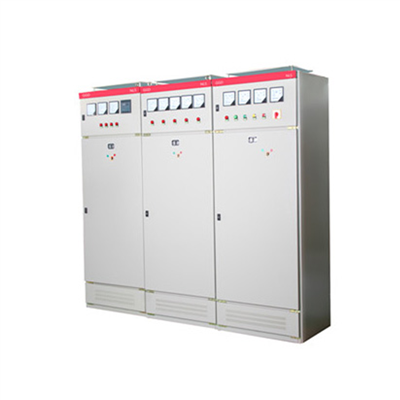
If you’re in the market for high voltage switchgear, don’t let the price range scare you off. It’s an investment in safety, reliability, and avoiding costly downtime. I’ve worked with hundreds of clients, from small businesses to large utilities, and I’ve seen that when you pick the right gear for your needs, the price pays for itself in the long run. If you’re ready to talk through your project, or even just get a clearer idea of what you need, feel free to reach out and let’s start a conversation.
High Voltage Switchgear References
- International Electrotechnical Commission (IEC). (2020). IEC 62271: High-voltage switchgear and controlgear standards.
- Institute of Electrical and Electronics Engineers (IEEE). (2021). IEEE C37: Standard for high-voltage switchgear and controlgear.
- U.S. Energy Information Administration (EIA). (2022). Power substation equipment cost analysis.
- National Electrical Manufacturers Association (NEMA). (2021). Standards for high-voltage switchgear enclosures and performance.
- Switchgear Industry Association (SIA). (2023). Global high-voltage switchgear market report and pricing trends.
Anhui Xinchen Electrical Equipment Co., Ltd.
We are one of the most reliable high voltage switchgear manufacturers and suppliers in China, specialized in providing high quality customized products. We warmly welcome you to buy bulk high voltage switchgear for sale here from our factory. Contact us for quotation.
Address: No. 8, Waihuan South Road, Economic and Technical Development Zone, Ningguo City, Xuancheng City, Anhui Province
E-mail: xinchen0316@126.com
WebSite: https://www.cn-xinchen.com/
