If you’re a specifier, electrical contractor, or just someone trying to wrap your head around what makes a solid T2 60kA Surge Protective Device (SPD) worth the investment, you’ve probably stumbled on the phrase “certification” more times than you can count. As a supplier of these units, I get a ton of questions from folks who don’t just want to know what we build—they want to know why the certifications matter, and what exactly we need to check off to make sure our T2 60kA units don’t just look good on paper, but actually work when a surge hits. Let’s break this down like we’re chatting over a coffee, no stuffy jargon overload, and skip all the fluff. T2 60KA Surge Protective Device
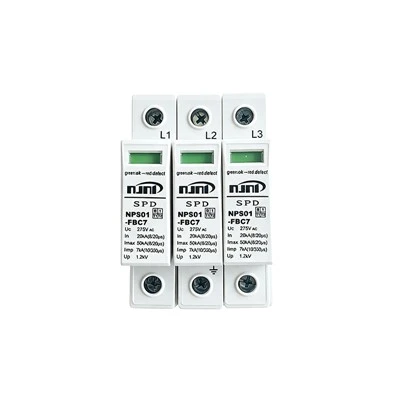
First, let’s start with the basics: what a T2 60kA SPD even is, for anyone who might be new here. T2 rated devices are the ones you install right after your main electrical panel’s incoming service, before the branch circuits. The “60kA” part means they’re rated to handle 60 kiloamps of surge current— that’s a big surge, like the kind you get from a nearby lightning strike bouncing through the utility lines, or even switching operations on heavy industrial equipment. Skip the right certifications for this bad boy, and you’re not just wasting money on a box that doesn’t do its job—you’re putting your building’s wiring, appliances, and even people at risk of fire or voltage spikes.
Now, the big certifications. In North America, the main ones everyone cares about are UL standards, specifically UL 1449. That’s the gold standard for SPDs here, full stop. The 60kA rating for T2 units isn’t just a number we pull out of thin air; UL 1449 splits surge tests into two parts: a “partial” test for smaller surges (that’s the T1 level, done right at the service entrance) and a “full” surge test for T2, which is exactly where our 60kA comes in. Wait, let’s be clear: when a T2 SPD is rated 60kA, that’s the maximum peak current it can divert, right? Not just the total energy it can absorb. UL 1449 requires that we test the unit three times at that 60kA level, and if it doesn’t fail open (meaning it stops conducting electricity once it’s done its job) or have a breakdown that causes short circuits, it passes. Also, there’s a temperature test here—surges generate heat, so UL checks that the unit’s internal components don’t overheat to a point where they could melt the casing or start a fire. For our T2 60kA units, we don’t cut any corners on this: every single batch goes through third-party testing at a UL-approved lab, not just our in-house stuff. In-house quality control is good, but third-party certification means it’s not just us saying it works—it’s an independent body confirming it.
If you’re working in Europe, you’re gonna see EN standards instead, specifically EN 61643-11. That’s the equivalent of UL 1449 for the EU, and it’s split into the same T1, T2, T3 tiers. The 60kA rating here is a bit different, though—EN uses “nominal discharge current” (In) instead of UL’s peak current (Iimp), so our T2 60kA SPD translates to an In of 25kA per phase, but they still check that the unit can handle that surge repeatedly without degrading. A lot of our international clients ask about this, so we make sure our units are either certified to both UL and EN, or we have separate test reports for each, because a project in Germany won’t accept a UL-only unit, and vice versa. Also, there’s the CE marking tied to EN 61643-11—you can’t sell a SPD in the EU without that, and it’s not just a sticker; it means we’ve done the testing and documentation to prove it meets all safety rules.
Wait, there’s another one people sleep on: the NRTL listing. NRTL stands for Nationally Recognized Testing Laboratory, and it’s basically UL’s cousin in the US and Canada. A lot of contractors will only use NRTL-listed equipment because it’s required by most electrical codes, like the NEC (National Electrical Code) Article 285, which specifically mandates that SPDs used in dwellings and commercial buildings have third-party certification from an NRTL. For our T2 60kA units, we’re NRTL-listed, so you don’t have to jump through extra hoops to get it approved on a job site. That’s a big one—code compliance is non-negotiable for most projects, and if your SPD doesn’t have that, you can’t get a permit.
Let’s talk about what certification isn’t, too. A lot of cheap SPDs on the market will slap a “60kA” label on their box without any testing. They might hit a 60kA surge once, but the next one cracks the internal varistor, so the SPD stops working and just becomes a conductive wire in your panel—worst case, that causes a fire. As a supplier, we’ve seen this way too often: a contractor buys a no-name T2 60kA unit that’s “certified” by some random lab no one’s ever heard of, and it fails a third-party test. So to avoid that, look for labs you actually know: UL, CSA (Canadian Standards Association), TÜV (the big one for Europe), those are the reputable ones. If a certification body isn’t on that list, it’s basically just a marketing trick.
Another key part of the certification process that no one talks about: ongoing factory inspections. It’s not like we test a batch of 10 units once, slap a label, and call it a day. For UL and CSA certification, we have to let them come inspect our factory at least once a year, make sure we’re building every unit the same way as the test sample. If we suddenly switch to cheaper varistors to cut costs, UL will flag that, and they’ll pull the certification if we don’t fix it. That’s why our T2 60kA units are consistent—every single one leaves our facility with the same components, because we can’t afford to lose that certification. That’s a level of accountability that a lot of small suppliers don’t have, so if you’re choosing an SPD supplier, ask to see their current certification and inspection reports. No reputable supplier will hide that.
Wait, what about industrial vs. residential? Our T2 60kA units are used in both, but the certification requirements are slightly different. For residential, NEC only requires a T2 SPD rated for 40kA minimum, but a 60kA is overkill in a good way—great for areas with frequent lightning, like the Southeast US or parts of Canada. For industrial facilities, though, you might need higher ratings, but T2 60kA is common for factories with heavy machinery that causes internal surges. In both cases, the same UL 1449 rules apply, but some utility companies might require a specific certification to connect it to their grid, so we work with clients to provide whatever docs they need for that.
Let’s also clear up a common myth: a higher kA rating doesn’t always mean a better SPD, but for T2, 60kA is a sweet spot for most medium to large projects. But even a 60kA unit is useless if it’s not certified. I’ve had clients come to us after buying a “60kA T2” unit from a supplier overseas, only to find out it wasn’t certified to UL 1449—they had to replace half their SPDs on a job site, which cost them time and money. So certification isn’t just a box to tick; it’s what protects you from making a costly mistake.
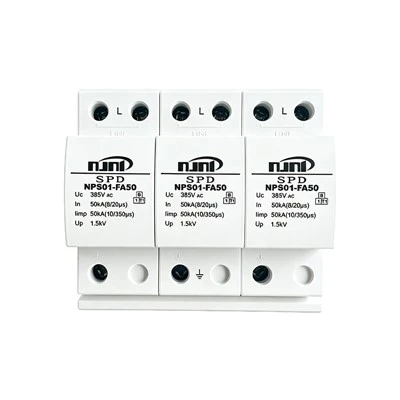
Now, let’s wrap this up from a supplier’s perspective. We don’t just sell a box with a 60kA number on it—we sell a product that’s been tested, inspected, and approved to keep your electrical system safe. If you’re a contractor, electrical engineer, or building owner who’s shopping for a T2 60kA Surge Protective Device, don’t just look at the price tag. Ask for current, third-party certification reports from reputable labs. Check that it meets NEC or your local electrical code requirements. And if you have questions about our units, or want to walk through how they’d fit your specific project, feel free to reach out—we’re here to help make sure you get the right SPD, not just the cheapest one. Don’t cut corners here; your electrical system (and your peace of mind) is worth it.
T1+T2 12.5KA Surge Protective Device References:
- Underwriters Laboratories (UL). (2020). Standard for Surge Protective Devices for Use in AC Power Circuits (UL 1449).
- International Electrotechnical Commission (IEC). (2018). Surge Protective Devices – Part 11: Surge Protective Devices for Low-Voltage Power Systems – Requirements and Test Methods (EN 61643-11).
- National Fire Protection Association (NFPA). (2023). National Electrical Code (NEC) Article 285: Surge Protective Devices.
Nanjing Ningpu Lightning Protection Equipment Manufacturing Co., Ltd.
Address: Building 1, No.20 Shengyuan Road, Lishui Economic Development Zone, Nanjing City, Jiangsu Province, China
E-mail: 3796023563@qq.com
WebSite: https://www.npspd.com/
