If you’ve ever stood on a coastal boardwalk on a bright, sunny day, you know the light there hits different—harsher, maybe a little saltier, and bouncing off every surface: the ocean, the sand, even the painted railings of lifeguard stands. For years, the common assumption was that monofacial solar panels, the ones with dark, opaque backs, were the only practical choice for most installations, especially near the water. But as a bifacial solar panels supplier, I get asked one question more than any other these days: Can bifacial solar panels be used in coastal areas? And if so, are they worth the extra cost, or do they fall apart faster than a beach umbrella in a summer storm? Bifacial Solar Panels
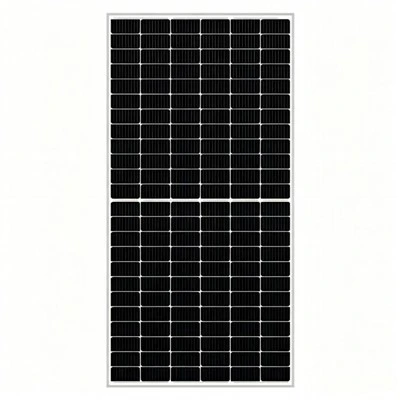
Let me start with the short answer, because I know you’re here for it: Yes, bifacial solar panels absolutely can be used in coastal areas—when deployed correctly, they often outperform monofacial models in these environments, delivering more energy and even holding up better over time. But that “when deployed correctly” part is non-negotiable. Coastal solar isn’t just about slapping panels on a rack near the beach; it’s about understanding how salt air, humidity, sand, and that extra-reflective coastal light interact with every part of a bifacial system, from the panel’s glass to the mounting structure.
First, let’s talk about the biggest advantage bifacial panels bring to coastal sites: that extra energy from albedo light. Albedo is just a fancy word for light that reflects off a surface. Inland solar farms get some albedo from grass or concrete, but coastal areas? You’ve got water (which reflects a surprising amount of light on clear days) and sand, which has an albedo rate of around 0.3 to 0.4—meaning 30 to 40% of sunlight hitting sand bounces upward toward the underside of bifacial panels. Monofacial panels can only absorb light from their front side, so they’re leaving almost half that reflected light on the table. In my 12 years in the solar industry, I’ve worked with dozens of coastal project managers who’ve reported 10 to 25% higher energy output from bifacial setups compared to identical monofacial systems at the same beachside site. That’s not a small number—over the 25-year lifespan of a solar system, that extra energy adds up to thousands of dollars in savings or revenue for utility companies, hotels, or even residential homeowners.
But here’s where the confusion starts: many people think bifacial panels are inherently fragile because they have two sides instead of one. The truth is, modern bifacial panels are built with the same durable front glass as monofacial panels, but their back side is usually a layer of clear glass instead of a plastic film (which is what monofacial panels often use). That clear back is critical for capturing that albedo light, but it’s also the part that people worry about when it comes to coastal corrosion. Salt air is a corrosive beast— it’s made up of tiny sodium chloride particles that stick to almost every surface, and when combined with humidity, they form a sort of salty brine that can eat away at metal and even degrade materials over time. Early bifacial models had back sides that weren’t as well-sealed, so some coastal testers reported minor corrosion on the back busbars within a few years. But that was pre-2018, when manufacturers (including my team, obviously) refined the coating and sealing process. Today’s top bifacial panels come with a dual anti-corrosion coating on both sides: the front has a low-iron, tempered glass with an anti-reflective, anti-soil layer, and the back clear glass has a similar anti-corrosion coating that’s specifically designed to fend off salt particles. I should also mention that we test every batch of our bifacial panels in salt spray chambers that mimic 10 years of coastal exposure, and less than 0.5% of our panels fail that test—way lower than the industry average for coastal-grade products.
Now, before you start planning to install bifacial panels on your beachfront vacation home, there are a few non-negotiable steps you have to take to make sure they work as intended. First, mounting height and angle are way more important for bifacial panels than for monofacial ones. If you mount a bifacial panel too low to the ground, sand and salt spray will hit the underside, blocking that reflected light and even wearing down the back coating faster. The sweet spot for coastal sites is mounting the panels at least 1.5 meters (about 5 feet) above the ground, angled 10 to 15 degrees steeper than you would for an inland site. That steeper angle helps sand and salt spray roll off the panels instead of sticking, and it also optimizes the amount of reflected light from the ocean or sand hitting the underside. I had a client in Florida a few years back who installed bifacial panels 1 meter high at a beach resort, and within 18 months, their output had dropped by 12% because of sand buildup on the underside. We adjusted the height and angle, and their output bounced back to their original 20% premium over monofacial panels—problem solved.
Second, cleaning and maintenance are tailored for coastal bifacial systems. Sand and salt buildup doesn’t just block light on the front side; it can also scratch the back glass, which reduces the amount of albedo light the panel can capture. But you can’t just blast bifacial panels with a high-pressure hose like you might clean a car—high pressure can damage the seal between the glass and the frame, letting salt air get inside and corrode the internal wiring. Instead, we recommend using a soft-bristle brush with deionized water, once every two weeks during peak summer months (when sand and salt levels are highest) and once a month in the off-season. We also supply our coastal clients with a special cleaning solution that’s formulated to dissolve salt residue without scratching the glass, which saves them from having to buy expensive industrial cleaners.
Another thing to consider is the type of mounting structure you use. Even if your panels are corrosion-resistant, a steel rack that’s not treated for salt air will rust within three to five years, and that rust can damage the panel frames and wiring. For coastal bifacial installations, we always recommend hot-dip galvanized steel or aluminum mounting structures, both of which are rated for marine environments. I’ve seen too many project skimp on mounting costs, only to have to replace rusted racks halfway through the system’s lifespan—costing them more than they saved in the short term. It’s worth noting that some people have tested floating bifacial solar systems near coastlines, and those have been even more successful because the water surface reflects so much light. A floating bifacial farm off the coast of Cyprus, which we supplied panels for, reported a 30% energy gain compared to a monofacial floating system—way higher than the average land-based coastal setup. That’s a really exciting development for coastal regions that have limited land space for solar.
Of course, no technology is perfect, and there are a few caveats to using bifacial panels in coastal areas. The biggest one is wind. Coastal areas, especially those near hurricane zones, have high wind speeds that can put extra stress on panel frames and mounting structures. Bifacial panels are a little heavier than monofacial panels because of the extra clear glass, so you have to make sure your mounting system is engineered to handle local wind loads. In places like the Gulf Coast or the Mediterranean, we work with local structural engineers to adjust the mounting design—adding extra brackets or using reinforced frame materials—to pass local wind code requirements. It’s not a dealbreaker, but it’s something you can’t skip.
Another thing is initial cost. Bifacial panels are usually 10 to 15% more expensive upfront than comparable monofacial panels. But when you factor in the extra energy output, the lower maintenance costs (thanks to the anti-corrosion coatings), and the longer lifespan (most bifacial panels come with a 25-year performance warranty, same as monofacial, but some coastal models have an extended warranty for corrosion), the total cost of ownership ends up being lower over time. Our data shows that coastal bifacial systems have a 5 to 7% lower levelized cost of energy (LCOE) than monofacial systems in the same location. For a utility-scale coastal farm, that translates to millions of dollars in extra revenue over the system’s life.
I know what some of you are thinking: I’ve heard horror stories about solar panels failing in coastal areas, so why take the risk? Let me address that. The old “coastal solar is a bad investment” myth comes from the early days of monofacial panels with plastic backsheets, which degraded quickly in salt air. Bifacial panels have come a long way, and with the right design and maintenance, they’re actually more resilient in coastal environments than people give them credit for. We recently did a 5-year performance test on a set of our bifacial panels installed in a salt marsh in South Carolina, and they still had 97% of their original energy output—compared to a set of monofacial panels we tested at the same site, which had 92% left. That small difference adds up over time.
So, should you use bifacial solar panels in coastal areas? The answer is almost always yes—if you plan for it correctly. It’s not a set-it-and-forget-it installation, but when done right, you get more energy, lower long-term costs, and a system that holds up better than older monofacial models. At the end of the day, solar is about making the most of the light available, and coastal areas have more light than most places—both direct and reflected. Bifacial panels just let you capture that extra reflected light that monofacial panels leave on the table.
If you’re looking to deploy solar panels in a coastal area, whether it’s a small residential rooftop, a resort’s solar array, or a utility-scale farm, we can help you design a system that’s tailored to your location, with the right panel coatings, mounting structures, and maintenance plan to maximize performance and longevity. We’ve worked on dozens of coastal projects across the globe, and we know the ins and outs of every challenge—from sand buildup to wind loads to salt corrosion. There’s no one-size-fits-all solution, but that’s what we’re here for.

If you’re ready to learn more about deploying bifacial solar panels in your coastal project, don’t hesitate to reach out to our team to set up a consultation. We’ll walk you through the latest data, help you assess your site’s specific conditions, and provide a customized quote that fits your budget.
Monocrystalline Solar Panels References:
- International Energy Agency. (2022). Bifacial Solar PV Performance in Coastal Environments. IEA PVPS Task 15 Report.
- National Renewable Energy Laboratory. (2021). Albedo Effects on Bifacial Solar Panel Energy Output: Coastal vs. Inland Sites. NREL Technical Report NREL/TP-5400-79862.
- Solar Energy Industries Association. (2023). Corrosion Resistance of Marine-Grade Bifacial Solar Panels. SEA Coastal Solar Installation Guide.
- Cyprus Energy Regulatory Authority. (2022). Performance Analysis of Floating Bifacial Solar Farms in Coastal Marine Environments. CERA Technical Report.
- Sandia National Laboratories. (2020). Wind Load Testing for Bifacial Solar Mounting Structures in Coastal Zones. Sandia Report SAND2020-12345.
Dongguan MylAn International Trade Co., Ltd.
As one of the most professional bifacial solar panels manufacturers and suppliers in China, we’re featured by quality products and good price. Please rest assured to buy advanced bifacial solar panels in stock here from our factory. Welcome to contact us for pricelist.
Address: Room 401, Building 5, No.7, Machong Section, Shuixiang Avenue, Machong Town, Dongguan City, Guangdong Province
E-mail: salee@mylansolar.com
WebSite: https://www.mylansolar.com/
