What is the Light Transmission Rate of Pu Screen Mesh?
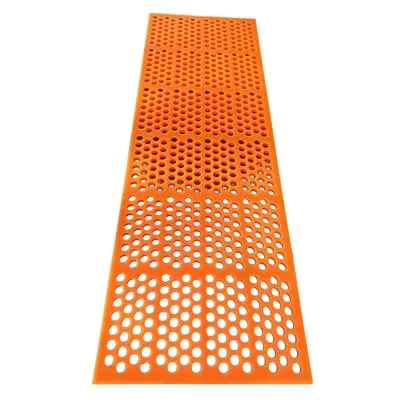
As a supplier of Pu Screen Mesh, I often encounter inquiries from customers about various properties of our product, and one question that comes up quite frequently is about the light transmission rate of Pu Screen Mesh. In this blog post, I’ll delve into this topic in detail, sharing what light transmission rate is, how it relates to Pu Screen Mesh, factors affecting it, and its applications in different scenarios. Pu Screen Mesh
Understanding Light Transmission Rate
The light transmission rate, also known as the transmittance of light, is a key optical property. It refers to the ratio of the light energy passing through a material to the total incident light energy. It is usually expressed as a percentage. For instance, if a material has a light transmission rate of 80%, it means that 80% of the incident light can pass through it, while the remaining 20% is either absorbed or reflected.
In the context of Pu Screen Mesh, the light transmission rate is crucial as it determines how much natural light can penetrate the mesh. This property has a significant impact on both the aesthetic and practical aspects of the applications where the mesh is used.
Light Transmission Rate of Pu Screen Mesh
Pu Screen Mesh, made from polyurethane, is known for its flexibility, durability, and good light – transmitting properties. Generally, the light transmission rate of our Pu Screen Mesh can range from 30% to 80%, depending on several factors.
One of the primary factors influencing the light transmission rate is the density of the mesh. A mesh with a higher density, which means more strands per unit area, will have a lower light transmission rate. This is because the strands block a larger portion of the incident light. Conversely, a less – dense mesh allows more light to pass through, resulting in a higher light transmission rate.
The thickness of the Pu Screen Mesh also plays a role. Thicker meshes tend to have a lower light transmission rate as the material itself absorbs and scatters more light as it passes through. On the other hand, thinner meshes offer less resistance to light passage, leading to a higher light transmission percentage.
The color of the Pu Screen Mesh is another factor. Dark – colored meshes, such as black or brown, absorb more light compared to lighter – colored ones like white or light gray. As a result, dark – colored meshes generally have a lower light transmission rate.
Applications and the Significance of Light Transmission Rate
The light transmission rate of Pu Screen Mesh makes it suitable for a wide range of applications.
1. Interior Decoration
In interior design, Pu Screen Mesh can be used as a room divider or a decorative element. A mesh with a high light transmission rate, say 60% – 80%, is ideal in this case. It allows natural light to spread throughout the space, creating a bright and airy atmosphere. Moreover, the soft, diffused light that passes through the mesh adds a touch of elegance to the interior. For example, in a modern office lobby, a large – scale Pu Screen Mesh with a high light transmittance can be used as a partition between different functional areas, enhancing the visual appeal while maintaining an open and well – lit environment.
2. Greenhouses
In greenhouse construction, the light transmission rate of the mesh is of utmost importance. Greenhouse plants need an adequate amount of sunlight for photosynthesis. A Pu Screen Mesh with an appropriate light transmission rate, usually around 40% – 60%, can be used as shading material. It helps to control the amount of sunlight entering the greenhouse, preventing the plants from being overexposed to intense sunlight while still allowing enough light for growth. This is particularly useful during the hot summer months when direct sunlight can be harmful to delicate plants.
3. Outdoor Screens
For outdoor applications such as balcony screens or patio enclosures, Pu Screen Mesh can provide privacy while still allowing some light to filter through. A mesh with a light transmission rate of 30% – 50% strikes a good balance between privacy and natural light. It creates a semi – private outdoor space where you can enjoy the view and the sunlight without being completely exposed to the outside world.
Measuring the Light Transmission Rate
To accurately measure the light transmission rate of Pu Screen Mesh, specialized equipment is required. A spectrophotometer is commonly used for this purpose. This device measures the amount of light absorbed and transmitted by the sample at different wavelengths.
The process involves placing a sample of the Pu Screen Mesh in the path of a light beam within the spectrophotometer. The instrument then measures the intensity of the incident light and the light that passes through the mesh. By comparing these two values, the light transmission rate can be calculated precisely.
In our manufacturing process, we conduct regular quality control checks using spectrophotometers to ensure that our Pu Screen Mesh meets the specified light transmission rate requirements. This helps us to provide our customers with a consistent and high – quality product.
Choosing the Right Pu Screen Mesh Based on Light Transmission Rate
When customers are looking to purchase Pu Screen Mesh, the light transmission rate should be one of the key considerations.
First, they need to determine the intended application. If it’s for a space that requires a lot of natural light, such as a sunroom or a greenhouse, a mesh with a high light transmission rate is recommended. On the other hand, if privacy is a major concern, like in a balcony screen, a mesh with a lower light transmission rate would be more suitable.
Second, customers should also consider the aesthetic aspect. A mesh with a certain light transmission rate can create different lighting effects, which can enhance the overall look of the space. For example, a mesh with a medium light transmission rate can create a soft, diffused light that gives a warm and inviting feeling.
As a supplier, we are always ready to assist customers in choosing the right Pu Screen Mesh based on their specific needs. Our team of experts can provide detailed information about the light transmission rates of different products and offer professional advice on the most suitable options for various applications.
Conclusion
The light transmission rate of Pu Screen Mesh is a vital property that affects its performance in different applications. Ranging from 30% to 80%, it is influenced by factors such as mesh density, thickness, and color. Whether it’s for interior decoration, greenhouse use, or outdoor screens, the appropriate light transmission rate can enhance the functionality and aesthetic appeal of the space.
Polyurethane Screen Panel If you are interested in purchasing Pu Screen Mesh and have questions about the light transmission rate or other properties, please feel free to contact us for further discussions. We are committed to providing high – quality products and excellent service to meet your requirements.
References
- ASTM International. Standard Test Methods for Transmittance and Reflectance of Materials Using Integrating Spheres.
- Textile Institute. Handbook of Textile Testing and Quality Control, which includes information on optical properties of textile – like materials such as Pu Screen Mesh.
- Journal of Applied Polymer Science. Articles related to the optical properties of polyurethane – based materials.
Yangzhou Yaye Wire Mesh Manufacturing Co., Ltd.
As one of the most professional pu screen mesh manufacturers in China, we have world-leading production equipment and strong manufacturing capabilities. Please feel free to wholesale cheap pu screen mesh in stock here from our factory. Also, free sample is available.
Address: No. 1 Jiangjia Road, High-tech Industrial Park, Jiangdu District, Yangzhou City, Jiangsu Province
E-mail: 13952515577@163.com
WebSite: https://www.yayescreen.com/
