As an operating room trolley supplier, I spend most of my workdays talking to surgical teams, procurement managers, and hospital administrators about the small, often overlooked tools that make operating rooms run smoothly. Last month, I had a long conversation with an orthopedic surgeon who’s been in practice for 18 years—he mentioned he’d never seen his team use standard operating room trolleys in orthopedic procedures, and he was curious if that was a mistake, or if ortho had its own separate, non-negotiable equipment. That question stuck with me, because it’s one I hear all the time, and it’s rooted in a real confusion: orthopedic surgery has unique needs that don’t always line up with the general OR trolleys most facilities have on hand. But here’s the truth I’ve learned working with hundreds of hospitals: general OR trolleys can absolutely be used in orthopedic operating rooms—if they’re chosen, configured, and maintained correctly to meet the specific demands of orthopedic care. Operating Room Trolley
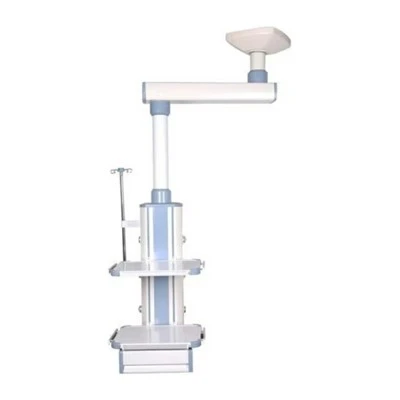
First, let’s break down what makes orthopedic operating rooms different from other surgical spaces, because that’s the core of this question. Orthopedic surgery isn’t just fixing broken bones; it’s total joint replacements (hip, knee, shoulder, which make up 60% of elective ortho cases in U.S. hospitals, per the American Academy of Orthopaedic Surgeons), spine surgeries, trauma repairs, and sports medicine procedures. Each of these has very specific supply needs. A total knee replacement, for example, requires a specific set of implants, liners, trial components, and specialized instruments that are much bulkier than what’s needed for a routine appendectomy. Trauma cases, on the other hand, often need rapid access to supplies like fracture fixation plates, screws, wound care materials, and even orthopedic positioning aids—items that are designed to be used quickly in emergency situations.
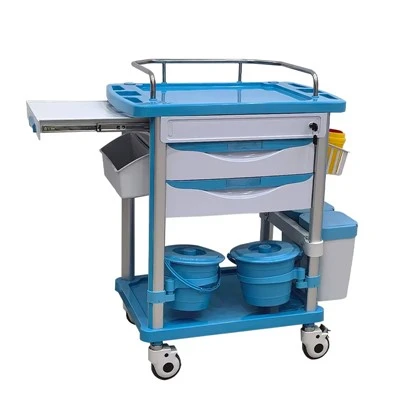
General OR trolleys are built for versatility, right? They have adjustable shelves, often are made of easy-to-clean stainless steel, and have locking wheels to keep them stable mid-procedure. But that versatility is also their limitation when it comes to ortho. A standard general trolley might have shallow shelves that can’t hold a full set of hip implants without tipping, or it might not have dedicated slots for the tiny, easy-to-lose screws that are critical in fracture work. It might not have built-in power ports for small, battery-powered orthopedic tools like drill drivers, or it might be too low to reach the sterile field when a surgeon is standing over a patient on an orthopedic operating table, which is often higher than general OR tables to accommodate large implants.
But here’s where the “can they be used?” part becomes a “how well can they be adapted?” For small, low-complexity ortho procedures—like a minor carpal tunnel release or a bunionectomy—general OR trolleys work perfectly fine. Those cases don’t require specialized implants or a huge volume of tools, so a standard versatile trolley can hold everything the surgical team needs, stay out of the way of the sterile field, and move easily around the OR as needed. I’ve worked with small rural hospitals that don’t have separate ortho-specific trolleys, and their teams perform these procedures without any issues. The problem comes when you scale up to larger ortho cases, which make up the majority of a hospital’s orthopedic volume and revenue.
Let’s talk about total joint arthroplasty, or TJA, for a second. When a surgeon is performing a total knee replacement, the timeline is critical—most cases take between 90 and 120 minutes, and delays can lead to higher infection rates, longer hospital stays, and higher costs. The last thing a surgical team wants to do is fumble for a screw or an implant because it’s buried at the bottom of a deep trolley shelf. That’s where configuration becomes key. As a supplier, I’ve worked with facilities to customize general OR trolleys for ortho use, adding specialized inserts that hold implant trial components in labeled, dedicated slots. These inserts are made of non-slip, easy-to-sterilize material, and they prevent tiny parts from shifting or falling during the procedure. We also add adjustable shelf extensions that can hold bulkier items like femoral stems or tibial liners without overcrowding the rest of the trolley, and we make sure the trolley is fitted with locking mechanisms that keep it stable when the team is using power tools, which generate vibration that can cause items to slide.
Another big consideration is infection control, which is non-negotiable in every OR, but especially in orthopedic cases. Orthopedic implants are foreign bodies, so any risk of contamination can lead to a deep surgical site infection (SSI), which has a 2% to 5% rate for primary TJA, per CDC data, and can add $30,000 or more to a patient’s hospital bill. General OR trolleys are designed to be easy to wipe down, with seamless surfaces that don’t have gaps where bacteria can hide. The same is true for ortho-specific trolleys, but when general trolleys are used correctly, they offer the same infection control benefits—if they’re maintained properly. That means regular deep cleaning between cases, using disinfectants that are approved for stainless steel and plastic surfaces, and avoiding cross-contamination between clean and dirty items (like surgical waste and sterile implants). I always tell my clients that a trolley is only as good as its maintenance, no matter what type it is.
Wait, but what about the pushback I hear from some ortho teams that say “our procedures need specialized trolleys”? That’s not wrong, but it’s not a reason to write off general OR trolleys entirely. A lot of ortho-specific trolleys are just general trolleys with pre-configured ortho inserts. For facilities that perform a high volume of TJA or trauma cases, investing in custom inserts or modified general trolleys is more cost-effective than buying a whole separate fleet of ortho-only trolleys, especially if their OR has limited storage space. I worked with a hospital in Chicago last year that was spending $12,000 a year renting specialized ortho trolleys for their trauma cases. We worked with their biomedical team to modify two of their existing general OR trolleys, adding adjustable shelving for trauma supplies, dedicated slots for fracture plates, and a built-in waste bin for used tools. That modification cost $1,800, and they haven’t had to rent another trolley in the 18 months since we installed it. The surgical team there told me the modified trolleys work better than the rented ones, because they know the layout and can reach items faster.
Of course, there are cases where general OR trolleys aren’t the best fit, and that’s an important caveat to mention. For very large orthopedic procedures, like spinal fusion that requires multiple long implants or complex instrumentation, or for mobile surgical suites that need equipment that can be moved between locations quickly, a general trolley might not have the capacity or mobility. But even then, many facilities opt to use general trolleys with heavy-duty casters and reinforced shelves, rather than purchasing specialized ortho trolleys that are only used a few times a month. The key is matching the trolley to the procedure volume, not the procedure type.
Another factor that often gets overlooked is staff training. I’ve seen facilities buy top-of-the-line general trolleys and modify them for ortho use, but their teams don’t know how to properly stock or operate them, leading to frustration. That’s why, as a supplier, I don’t just sell trolleys—I provide training on how to configure them for different ortho cases, how to maintain them for infection control, and how to adapt them if a case changes (like if a trauma patient requires more supplies than planned). For example, teaching a circulating nurse to label shelves for specific implant trials, or to lock the trolley’s wheels during power tool use, makes a huge difference in how well the trolley works for ortho procedures.
Let’s circle back to that surgeon I talked to at the start. A few weeks after our first conversation, he reached out and told me his team had tested two of our modified general OR trolleys for a week, using them for 12 minor and two moderate ortho procedures. He said the only issue was that one of the shelves was too shallow to hold a full hip implant set, so we added an adjustable extension to that trolley. Now, he’s planning to recommend the modified trolleys to his hospital’s procurement team, because they save money and work just as well as the specialized ones they were using before. That’s the reality of this question: it’s not a yes or no answer. General OR trolleys can be used in orthopedic operating rooms, when configured, maintained, and staffed correctly to meet the unique needs of orthopedic care.
I know that for some small, low-volume facilities, this might not be feasible, but for most mid-sized and large hospitals, adapting existing general OR trolleys is a practical, cost-effective solution. The key is working with a supplier who understands both general OR needs and orthopedic requirements, someone who can help customize trolleys without pushing unnecessary specialized equipment. If you’re an OR manager, surgeon, or procurement professional reading this and you’ve been weighing whether to invest in new trolleys for your orthopedic cases, I’d encourage you to think beyond “general vs. ortho” and focus on what will work for your specific case volume, staff needs, and budget.
At the end of the day, the goal of any OR equipment is to help surgical teams deliver safe, efficient care to patients. Trolleys are one of the most frequently used pieces of equipment in any OR, but they’re also one of the most customizable. General OR trolleys can absolutely serve orthopedic operating rooms well—you just have to make sure they’re set up right, cared for properly, and that your team knows how to use them. If you have questions about how to adapt your current trolleys, or if you’re looking for a partner to help you find the right solution for your orthopedic needs, feel free to reach out to our team to discuss your requirements and explore options that fit your facility’s unique needs.
Operating Room References:
- American Academy of Orthopaedic Surgeons. (2023). Orthopedic Surgery Volume and Procedure Trends in U.S. Hospitals.
- Centers for Disease Control and Prevention. (2022). Surgical Site Infection Rates Following Total Joint Arthroplasty.
- World Health Organization. (2021). Infection Prevention and Control in Operating Rooms: Core Guidelines for Trolley and Equipment Maintenance.
- Journal of Orthopaedic Nursing. (2020). Cost-Effective Adaptation of General Operating Room Trolleys for High-Volume Orthopedic Procedures.
Eusokon Technology ( Shanghai ) Co., Ltd.
As one of the most professional operating room trolley manufacturers and suppliers in China, we offer a wide range of products with superior quality. Please feel free to wholesale advanced operating room trolley in stock here from our factory.
Address: No.2 building lane 89,Huguang east road Minhang area Shanghai China
E-mail: dorisyang@eusokon.com
WebSite: https://www.eusokon.com/
