If you’ve spent any time in industrial supply—especially as someone who’s built a career around delivering pipe connectors, you’ve probably gotten this question a dozen times: “Can a simple pipe connector work in a nuclear power plant’s piping system?” Pipe Connector
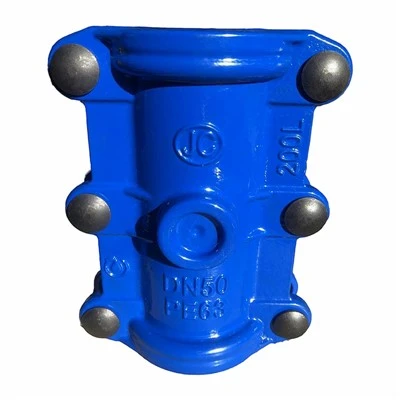
I get it. When you picture a nuclear plant, you don’t see generic hardware holding together miles of pipes. You see thick steel, controlled environments, and components that meet standards most of us will never fully wrap our heads around. For years, as a pipe connector supplier, I’ve fielded this query from engineers, plant operators, and even industry peers, and the answer isn’t a flat “yes” or “no.” It’s nuanced, rooted in decades of safety regulations, rigorous testing, and the kind of rigor that defines nuclear energy infrastructure.
Let’s start with the basics. Nuclear power plant piping systems are split into two main categories: safety-related and non-safety-related. Safety-related piping is the backbone of the plant’s ability to prevent or mitigate accidents. That includes pipes that carry coolant to the reactor core, remove heat from spent fuel pools, or contain radioactive materials. If that piping fails, the consequences are catastrophic—think of the core meltdowns that have defined nuclear safety history. Non-safety-related piping is all the rest: drains, ventilation lines, or auxiliary systems that don’t directly impact core safety. Pipe connectors can work in both, but with very different rules attached.
When it comes to safety-related piping, the bar is impossibly high. These systems are regulated by global bodies like the U.S. Nuclear Regulatory Commission (NRC), the International Atomic Energy Agency (IAEA), and regional agencies like the Nuclear Regulation Authority in Japan. For a pipe connector to even be considered for these lines, it has to meet a set of standards far stricter than what’s required for oil refineries or chemical plants. The most common standard here is ASME Section III, which sets rules for components used in nuclear applications. This isn’t a “check a box” process. Every connector has to go through non-destructive testing, material analysis, and endurance testing that simulates decades of use—extreme temperatures, pressure fluctuations, radiation exposure, and even seismic events. Radiation is a big one. Most materials degrade over time when exposed to high levels of radiation, either becoming brittle or losing their structural integrity. A connector that works in a factory might crack in a nuclear plant after years of radiation bombardment. That’s why we can’t just use any pipe connector here.
But here’s the thing: that doesn’t mean pipe connectors designed for general industrial use are entirely off-limits. For non-safety-related piping, many plants rely on standard, tested connectors that are already proven to hold up to regular industrial stress. These lines don’t carry radioactive material or directly impact core safety, so the requirements are less stringent, though still far higher than what you’d find in residential plumbing. For example, a connector used in a drain line or a ventilation duct in a nuclear turbine building might be a stainless steel compression coupling—something a supplier like us produces every day for industrial applications—because it meets the plant’s non-safety material and pressure standards. But even here, we have to be careful. Even for non-safety components, the plant’s quality control team will audit every batch of connectors, check their material certifications, and verify they can withstand the specific conditions of that line. I’ve had a customer reject a shipment of standard connectors once because a material test report had a minor typo. It wasn’t that the connectors themselves were bad—it’s that nuclear operators don’t take any chances.
As a supplier, this is where we distinguish ourselves. Years ago, I learned that there’s a huge difference between selling a pipe connector and selling one that’s safe for nuclear use. Early on, we tried to market our standard stainless steel connectors to a small nuclear plant project, only to get shut down by the lead engineer, who told us, “Your product works for a warehouse, but not here.” That mistake taught me that nuclear customers don’t care about the price or the speed of delivery alone. They care about traceability. Every component has to be traceable back to its raw material source, its manufacturing process, and its testing records. They care about qualification. A connector has to be listed on approved component databases, like the NRC’s General Letters or the IAEA’s Safety Standards Series, before it’s even considered. And they care about consistency. A connector that works today has to work the same way tomorrow, ten years from now, and through every possible stress the plant might face.
So how do we meet these needs? Over the last decade, our team has invested heavily in qualifying a line of nuclear-grade pipe connectors that meet ASME Section III standards. We use materials like 316L stainless steel, which is resistant to corrosion and radiation, and every batch undergoes rigorous testing: pressure tests at 1.5 times the operating pressure, radiation aging tests that simulate 40 years of exposure, and seismic testing that replicates the forces of a major earthquake. We also maintain complete documentation for every connector, from the raw steel mill certificate to the final test report, so our customers can hand that paperwork directly to nuclear regulators and get it approved in days, not weeks.
It’s not just about the product, though. Nuclear plant projects move slowly, and lead times can stretch for months. We’ve built our business around flexibility, too. When a plant is retrofitting a safety-related piping line, they might need a custom-sized connector that fits a specific pipe diameter and meets a rare ASME standard. Our engineering team works with their design team to modify existing connectors or build new ones from scratch, all while keeping traceability and qualification at the forefront. Last year, we worked on a small reactor project where a standard flange connector wouldn’t fit the plant’s custom pipe spacing. We designed a custom weld-neck connector that was qualified to ASME Section III, and delivered it on time—without cutting any corners on testing.
Of course, there are still limits. No pipe connector supplier can sell a generic residential PVC connector to a nuclear plant, and no responsible supplier would try. The stakes are too high. A failed connector in a safety-related line can lead to shutdowns, costly repairs, and in the worst cases, safety risks. That’s why we focus on two things: staying within the bounds of what’s approved for nuclear use, and educating our customers on the difference between standard and nuclear-grade connectors. We don’t want to mislead anyone. If a line is safety-related, we’ll tell them exactly what their options are—whether it’s a standard connector that’s already qualified, or a custom one we can build to meet their needs. If it’s non-safety, we can offer a cost-effective, reliable connector that meets their requirements without overspending on unnecessary qualifications.
I’ve also learned that trust is everything in this industry. Nuclear plant operators don’t want to partner with a supplier they’ve never worked with before. They want suppliers who understand their strict standards, have a track record of delivering qualified components, and stand behind every product they sell. That’s why we focus on long-term relationships, not just one-off sales. We have regular meetings with our nuclear customers, sharing updates on new qualifications, changes in regulations, and new testing methods that can help them improve their safety. When a new standard for radiation-resistant connectors comes out, we’re testing it before our customers even ask, so we can be ready when they need it.
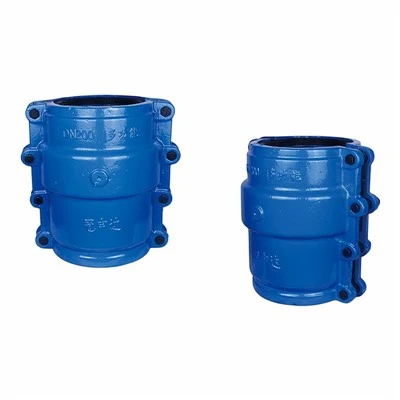
So to circle back to the original question: Can a pipe connector be used in a nuclear power plant’s piping system? The answer is yes—but only if it meets the specific standards for that line, whether safety-related or non-safety-related. It’s not a one-size-fits-all answer, and it’s not about buying the cheapest component or a generic off-the-shelf part. It’s about understanding the rigorous regulations, the rigorous testing, and the care that goes into every part of a nuclear infrastructure.
Bell End Repair Clamp If you’re an engineer, plant operator, or someone working on a nuclear project and you’re not sure what kind of pipe connector you need, don’t guess. Reach out to a supplier who specializes in qualified components and understands the unique needs of nuclear power. We’ve spent years building that expertise, and we’re ready to help you navigate the rules, the testing, and the delivery of a connector that’s safe, reliable, and meets all your requirements.
References
- ASME Boiler and Pressure Vessel Code, Section III: Rules for Construction of Nuclear Facility Components. American Society of Mechanical Engineers, 2023.
- U.S. Nuclear Regulatory Commission, “Regulatory Guide 1.122: Qualification of Mechanical Components for Safety-Related Nuclear Power Plants,” 2021.
- International Atomic Energy Agency, “Safety Standards Series GS-G-1.3: Safety of Nuclear Power Plants: Operation,” 2015.
- Nuclear Regulatory Commission, “Generic Letter 2010-01: Review of Component Qualification Programs for Nuclear Power Plants,” 2010.
- Nuclear Regulatory Commission, “Regulatory Guide 1.20: Environmental Qualification of Equipment for Nuclear Power Plants,” 2007.
Fujian Fufa Valve Manufacturing Co., Ltd.
As one of the most professional pipe connector manufacturers and suppliers in China, we’re featured by quality products and good price. Please rest assured to buy durable pipe connector made in China here from our factory. Welcome to view our website for more information.
Address: Meilin Xikou Industrial Zone, Nan’an City, Quanzhou City, Fujian Province
E-mail: hongwenjin@fufafamen.cn
WebSite: https://www.fufavalve.com/
