Hey there, electrical enthusiasts and industry pros! I’m a supplier of Oscillatory Wave Partial Discharge Testers, and today I wanna dive into a super important topic: the grounding requirement for these nifty devices. Oscillatory Wave Partial Discharge Tester

First off, let’s quickly get on the same page about what an Oscillatory Wave Partial Discharge Tester does. It’s a key tool used to detect partial discharges in electrical cables and equipment. Partial discharges can be early signs of insulation deterioration, which, if left unchecked, can lead to serious problems like cable breakdowns and power outages.
So, why is grounding so crucial for an Oscillatory Wave Partial Discharge Tester? Well, proper grounding is like the foundation of a house for this testing equipment. It serves several vital purposes.
One of the main reasons is safety. When we’re dealing with electrical testing, safety should always be our top priority. Without a solid ground connection, there’s a risk of electric shock to the operators. You see, during the testing process, the equipment generates electrical currents and voltages. If there isn’t a proper path for these electrical charges to flow to the earth, they could potentially build up and cause harm to anyone who comes into contact with the tester.
Another important aspect of grounding is to reduce electrical noise. Electrical noise can interfere with the accurate measurement of partial discharges. When the tester is well – grounded, it provides a stable electrical reference point. This helps to minimize the background noise in the electrical system. You know how it’s hard to hear someone speak clearly in a noisy room? Well, in the same way, electrical noise can make it difficult for the tester to accurately detect and analyze partial discharges. By grounding the tester, we can create a more "quiet" electrical environment for reliable measurements.
Now, let’s talk about the specific grounding requirements. The first thing we need is a low – resistance ground path. This is often achieved by using a grounding electrode. A common type of grounding electrode is a copper rod driven into the ground. The copper rod should be deep enough to ensure good contact with the earth. In general, it’s recommended to drive the rod at least 2.4 meters (about 8 feet) into the ground. This deep burial helps to reduce the resistance between the electrode and the earth, allowing electrical charges to flow easily.
The material of the grounding conductor also matters a lot. We usually use copper conductors for grounding. Copper has excellent electrical conductivity, which means it can effectively carry electrical currents to the ground. The size of the conductor depends on the current – carrying capacity required. For an Oscillatory Wave Partial Discharge Tester, a conductor with a sufficient cross – sectional area is needed to handle the electrical currents generated during testing. A smaller conductor could overheat or even melt if it can’t handle the current, which would defeat the purpose of grounding.
In addition to the grounding electrode and conductor, we also need to ensure a proper connection between all the components of the grounding system. All the parts of the tester, such as the chassis, cables, and measurement sensors, should be properly connected to the grounding conductor. Loose connections can increase the resistance of the grounding path, making it less effective. We can use proper connectors and fasteners to secure these connections.
It’s also a good idea to regularly check the grounding system. Over time, the grounding electrode can corrode, and the connections can loosen. By performing regular inspections, we can detect any potential problems early and take corrective actions. For example, if we find that the grounding electrode is corroded, we can replace it. Or if a connection is loose, we can tighten it.
Now, let’s talk about some real – world scenarios. In a factory or a power substation, the environment can be quite complex. There may be other electrical equipment nearby, which can generate electrical interference. In such cases, we need to pay extra attention to the grounding requirement. We might need to use additional shielding techniques to further reduce the impact of external interference on the partial discharge measurements.
In some outdoor testing situations, the ground conditions can vary greatly. For instance, in dry soil areas, the soil resistivity is relatively high, which can increase the resistance of the grounding path. In these cases, we may need to use grounding enhancement methods, such as adding grounding salts to the soil around the grounding electrode. This can help to lower the soil resistivity and improve the grounding performance.
As a supplier of Oscillatory Wave Partial Discharge Testers, I’ve seen firsthand how important proper grounding is. I’ve worked with many customers who initially had issues with inaccurate measurements or safety concerns. After helping them set up a proper grounding system, they were able to get reliable test results and operate the equipment safely.
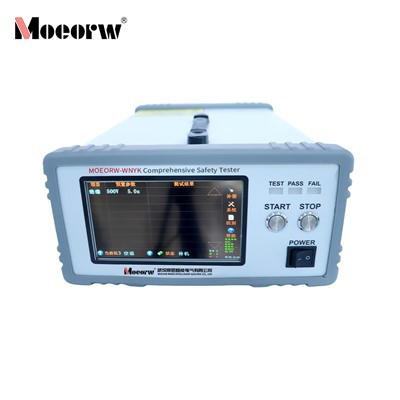
If you’re in the market for an Oscillatory Wave Partial Discharge Tester or need advice on grounding requirements, don’t hesitate to reach out. We’ve got the expertise and the high – quality products to meet your needs. Whether you’re a small electrical contractor or a large power utility, we can provide you with the right solutions. Our team is always here to help you understand the technical details and ensure that you get the most out of your testing equipment. So, let’s have a chat and see how we can work together to improve your electrical testing processes.
Relay Protection Tester References:
- Electrical Safety Standards Handbook
- Guide to Partial Discharge Testing in Electrical Equipment
Wuhan Moen Intelligent Electric Co., Ltd.
As one of the most professional oscillatory wave partial discharge tester manufacturers in China, we’re featured by quality products and good price. Please rest assured to buy high quality oscillatory wave partial discharge tester in stock here and get quotation from our factory. Customized orders are welcome.
Address: Building A, No.1, Fenghuangyuan 2nd Road, Donghu New Technology Development Zone, Wuhan, Hubei, China
E-mail: info@hvhipotsystem.com
WebSite: https://www.hvhipotsystem.com/
