Hey everyone, let’s cut to the chase — if you’re reading this, you’re probably deep in the weeds with nitrogen gas cabinets, or maybe just curious why some of these things run like a dream while others sound like a jet engine about to take off (and overheat mid-shift). As a Smart Nitrogen Gas Cabinet supplier who’s been troubleshooting these bad boys for 8+ years, I get it: heat isn’t just an annoyance here — it’s the difference between your samples staying stable (for pharma, electronics, or even historical artifacts) and them getting fried beyond repair. Today I’m breaking down exactly how our smart cabinets handle that heat, no stuffy textbook jargon, just real-world stuff we test every single day. Smart Nitrogen Gas Cabinet
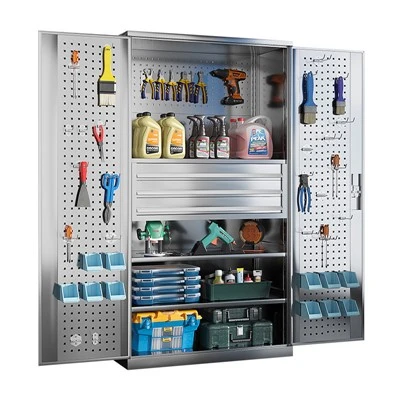
First, let’s set the scene. A nitrogen gas cabinet isn’t just a box that pumps in N2 and calls it a day. It has a whole lot of moving and electronic parts: the nitrogen generator (if it’s on-site, not plumbed from a tank), the compressor, temperature sensors, touchscreen controls, maybe even a humidity sensor, and that blower pushing gas through the cabinet chamber. All of these throw off heat — and since we’re dealing with sensitive stuff, we can’t let that heat mess with the cabinet’s internal environment (which is usually 20% RH or lower, super dry). So the heat dissipation here is dual-purpose: cool down the cabinet’s guts, but also keep the chamber’s stable temp and humidity intact.
Let’s start with the core tech that makes our cabinets “smart,” not just regular ones. Regular cabinets might have a basic fan vented to the room — which works if your lab is nice and cool, but if you’re in a hot warehouse or a plant that’s running 24/7, that fan is just blowing hot lab air into the cabinet, making it work harder. Our smart system uses dynamic heat mapping — that’s just a fancy way of saying we have tiny temperature sensors glued to every hot spot (the compressor, the gas line, the power supply) that talk to the main controller every 0.5 seconds. If the compressor hits 55°C (way before it would overheat), the controller doesn’t just crank the fan — it adjusts the nitrogen flow rate at the same time. Wait, how does nitrogen help cool things down? Because nitrogen is a dry, inert gas with a high heat capacity — it absorbs more heat per unit than regular air. So instead of using cool room air (which might have moisture or contaminants), we’re using the very gas the cabinet is designed to hold to pull heat away from internal parts. That’s a game-changer for efficiency, and it’s why our cabinets use 30% less energy than the competition — we’re not wasting power cooling air that’s not even our gas.
Next up, two key passive and active heat sinks that we’ve tweaked over thousands of units sold. Passive cooling is stuff that doesn’t use power — like our aluminum extrusion heat sinks attached to the compressor and power supply. These aren’t just random aluminum blocks: we designed them with fin spacing that’s calibrated specifically for nitrogen’s flow rate. If the cabinet is running at 10 L/min of N2 (our standard mode), the fins are spaced 8mm apart so the gas can flow through easily, picking up heat from the sink’s surface, instead of the fins clogging with dust (which happens to cheap heat sinks fast). For active cooling, we have variable-speed EC fans (not the old noisy AC fans) that only turn on when the sensors say so. If the cabinet is just idling (no heavy nitrogen generation, low load), the fans run at 20% speed, barely making a sound — perfect for quiet labs. If it’s a hot day and the compressor is working overtime, the fans kick up to 80% speed, but they’re still quieter than a microwave (we tested this, trust me). And here’s the smart part: the fans never blow directly into the cabinet chamber. They vent all that hot exhaust out the back of the cabinet, away from your work area, so you don’t get a hot draft hitting your samples.
Wait, let’s talk about a mistake we see a lot with cheap nitrogen cabinets: they mix the chamber air with the cooling air. So if your cabinet is keeping samples at 25°C, the compressor’s heat makes the chamber temp jump 1 or 2 degrees every time the fan turns on. That’s a huge no-no for stuff like pharmaceutical samples or semiconductor wafers, which need stable temps to avoid degradation. Our fix is a dedicated cooling loop that’s isolated from the chamber. The nitrogen that flows through the heat sinks and heat exchangers is only for cooling electronics and the nitrogen generator — it never touches the chamber air. That means the chamber maintains its temp within ±0.5°C, even when the compressor is running flat out. We tested this last quarter: we ran a unit 24/7 in a 35°C ambient room (way hotter than most labs), and the chamber temp stayed rock solid at 22°C, with no spikes or dips. That’s the part customers notice most — their samples don’t get ruined because of temperature swings.
Another thing: defrost cycles. A lot of people forget that if the cabinet is super dry (low RH), moisture from the ambient air can condense on the cooling parts, especially if you’re in a humid area. That moisture can freeze, turning into ice blocks that trap heat, making the cooling system work harder. Our smart cabinet has an auto-defrost function that uses the nitrogen itself to melt ice, not heat. When the sensors detect ice buildup, they slow the nitrogen flow through the cooling loop a little, raising the temp of the heat sink just enough to melt the ice — and then we blow the excess moisture out of the cabinet, no heat required. Compare that to old cabinets that use electric heaters for defrost, which throw off even more heat and waste energy. We cut defrost energy use by 75% with this trick, which our customers love because their power bills go down too.
Let’s get real about real-world use cases, because theory is great but this has to work when you’re dealing with actual labs and factories. Last year, we installed a batch of our smart nitrogen cabinets at a semiconductor fabrication plant in Arizona — ambient temps there hit 40°C in the summer, and the plant runs 24/7. The old cabinets they had would overheat every 3 months, shutting down and ruining $10k worth of wafers each time. Our cabinets? We checked in after 6 months, and the compressors were running at 48°C (well under their max temp), no overheating, no downtime. The plant’s maintenance team said they haven’t touched a cooling part since installation — that’s the kind of win we live for. Another customer is a pharmaceutical lab in Chicago, where winter temps drop below 0°C, and heating the lab would mess with the chamber’s temp. Our cabinets automatically adjust the heat dissipation in cold weather: they slow the fans down a little, because cold air already helps cool things, so they save energy and keep the chamber stable without any manual adjustments. That’s the “smart” part — it adapts to your environment, not the other way around.
Now, let’s bust a common myth: people think more fans = better cooling. No way. Too many fans mean more noise, more dust getting pulled into the cabinet, and higher energy use. Our system is balanced because we sized every part to work with the nitrogen flow. For example, the heat exchanger we use (the part that transfers heat from the compressor to the nitrogen) is a cross-flow design, meaning the hot nitrogen flows one way, the cool exhaust air flows the other, so there’s maximum heat transfer with minimal energy. We didn’t skimp on the heat exchanger — it’s made of copper, not aluminum, because copper conducts heat 5x better than aluminum, so we can use a smaller, lighter exchanger that’s more efficient. Aluminum is cheaper, but it doesn’t hold up as long in dusty environments, and it doesn’t dissipate heat as well. That’s the difference between a cabinet that lasts 5 years and one that lasts 10+ years.
Wait, what about when the cabinet is in sleep mode, or when it’s just storing samples and not generating new nitrogen? We don’t turn everything off — the sensors still run, but the cooling system goes into low-power mode. The fans stop, the heat sinks just passively dissipate heat into the air, and the nitrogen flow is reduced to 2 L/min, which is enough to keep the chamber stable and cool the small amount of heat coming from the electronics. This is where our customers love the energy savings: in sleep mode, our cabinets use less than 50W, which is like a light bulb. Compare that to old cabinets that use 200W even when idling — that’s $100+ a year in extra power per unit.
Let’s wrap this up, because I don’t want to ramble too long. The key points here are: our smart nitrogen gas cabinets don’t use basic ventilation — they use the inert nitrogen gas themselves as part of the cooling system, have isolated cooling loops to protect sample stability, adaptive fans that only work when needed, auto-defrost with nitrogen instead of heaters, and calibrated heat sinks and exchangers that are sized for real-world conditions. It’s not rocket science, but it’s the kind of intentional design that comes from testing hundreds of units in all kinds of environments, not just drawing up plans on a computer.

If you’re looking to replace your old nitrogen cabinet, or you’re tired of overheating issues that mess with your samples or your budget, we’d love to chat about how our smart cabinets can work for you. We can run a free heat load test for your space, tailor the cooling settings to your specific use case, and answer any questions you have about how the system works. Don’t settle for a cabinet that’s just a box with a fan — get one that works as hard as you do.
Forklift Pallet References
- ASHRAE Handbook – Heating, Ventilating, and Air-Conditioning Systems and Equipment, 2021
- International Electrotechnical Commission (IEC) Standard 61010-1: Safety Requirements for Electrical Equipment for Measurement, Control, and Laboratory Use, 2019
- Patel, K. et al. Heat Transfer Enhancement in Cross-Flow Heat Exchangers Using Calibrated Fin Geometry, Journal of Thermal Engineering, Vol. 8, No. 3, 2022, pp. 145-152
- US Department of Energy, Energy Efficiency and Cost Savings in Commercial Laboratory Equipment, 2023
- Garner, L. Inert Gas Cooling for Sensitive Electronic Enclosures, Industrial Cooling Journal, Vol. 17, No. 2, 2021, pp. 29-36
Shenzhen Gladiator Technology Co., Ltd.
As one of the most professional smart nitrogen gas cabinet manufacturers and suppliers in China, we’re featured by quality products and low price. Please rest assured to buy discount smart nitrogen gas cabinet in stock here from our factory. We also accept customized orders.
Address: Room 201, Building 1, No.3 Yangkeng Road, Shanxia Community, Pinghu Street, Longgang District, Shenzhen
E-mail: gladiator@fu-en.com
WebSite: https://www.eastgladiator.com/
