Hey guys, quick question: when was the last time you sat in a classroom and thought, “Man, this desk is heavy as hell and impossible to move anywhere fast?” If you’re a teacher, a parent of a school-aged kid, or even just someone who’s spent time in a school lately, that frustration is probably super relatable. And honestly, that’s why I get so many questions every week as a school desk supplier: “Are there actually portable school desks?” Like, yeah, I get why that’s the first thing you ask when you’re tired of tripping over fixed desks during fire drills, or watching a 5th grader huff and puff trying to drag a 50-pound plastic-and-metal unit across the room. School Desk
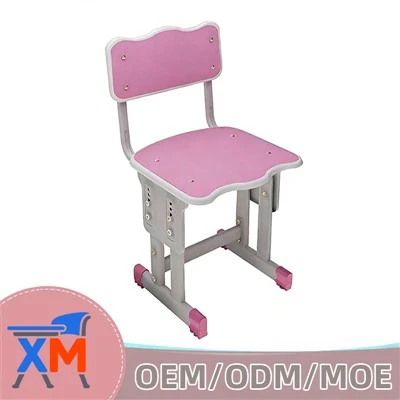
Let’s cut to the chase: portable school desks 100% exist, and they’re not just some niche product made for a random tiny school in the middle of nowhere. These aren’t the rickety folding desks you used in elementary school for one week during art class, either. They’re designed for actual classroom use—built to hold textbooks, a laptop, lunch trays, and even a student who’s had a little too much after-school snack, without falling apart mid-year. I’ve been selling school desks for almost 12 years now, and over that time, the shift to portable options has been huge—almost every school district I work with has swapped at least half their old fixed desks for portable ones in the last five years. So trust me, this isn’t a “does it exist?” kind of question anymore. It’s more like “which type of portable desk is actually going to work for my space?”
First, let’s talk about why fixed desks stuck around for so long. For decades, schools just went with bolt-down desks because they felt sturdy, and they saved floor space? Wait, no, actually—wait, fixed desks often leave gaps you can’t use, right? Like, if you have a row of bolted desks, you can’t squeeze an extra student in, or move the whole group to make space for a guest speaker, or rearrange desks for group projects fast. Fire drills were a nightmare, too. I remember one middle school I worked with a few years back; they had a fire drill scheduled for 8 a.m., and the admin came to me panicking an hour before because one of their teachers had gotten stuck under a desk when the row jammed up in the hallway. Portable desks fix that—most weigh between 15 and 25 pounds, so a 10-year-old can lift them, a teacher can move a whole row in 30 seconds, no straining, no wedging in doorways.
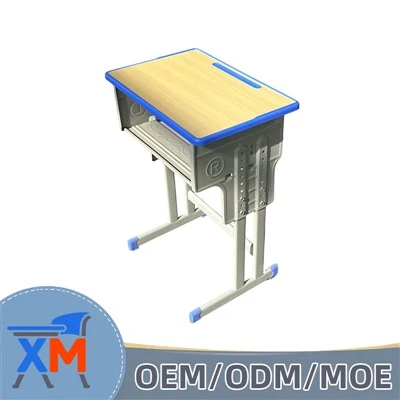
But wait, not all portable desks are made equal. Let’s break down the main types I supply, because that’s the stuff people actually care about. First up: the single-student portable desk, the workhorse of most modern classrooms. These are like regular student desks, but instead of bolt holes at the legs, they have rounded, non-slip feet that grip the linoleum or carpet without scratching. They have the same size top as fixed desks—usually around 20×28 inches, enough for a Chromebook, a math workbook, and a water bottle. Some even have a small under-desk tray for backpacks, so you don’t have kids leaving their bags on the floor tripping people. The best part? If a desk gets dented or the hinge for the seat breaks (which happens occasionally, let’s be real), you just swap out that one desk, not the whole line. That’s a big win for schools on tight budgets, which most are, these days.
Then there are group portable desks. I know, you’re thinking “wait, portable and group?” Yeah, they exist! These are usually long, rectangle or u-shaped tops that fit 2, 4, even 6 students, with matching seats. They’re super popular for STEM classes or middle school group work, where kids need to huddle around a project, or for assemblies when you need to set up extra space fast. I had a high school client last year that used their group portable desks to set up a whole gym area for standardized testing last month—they moved all their regular desks to the side, rolled these group desks in, and had 20 extra test stations ready in an hour. That’s the kind of flexibility old fixed desks can’t touch.
Wait, but what about the elephant in the room: durability. Because a lot of people I talk to say, “Portable = flimsy, right?” No, not if you get the right ones. The portable desks I sell are made from high-density polyethylene, the same stuff that’s used for outdoor playground equipment—so it can handle being dragged, dropped, spilled on (think juice boxes, glue, even that kid who accidentally knocks over their water bucket), and it won’t crack or fade after three years. The metal parts are powder-coated, so no rusting, even if a desk sits in a rainy garage over summer. I tested one of my top-selling portable desks with my 14-year-old nephew—he dragged it around his backyard, stood on it (don’t judge, he’s a kid), and it still worked. Compare that to the old folding desks we had in school that would fold in half if you put a backpack on them. These are built for actual school use, not just for a weekend at a craft fair.
Another big thing people ask about: are they adjustable? Because desks that fit a 7-year-old are way too small for a 12-year-old, and vice versa. Most portable student desks I supply have adjustable height legs—you can crank them from like 18 inches up to 30 inches, which covers grades K through 8, and even most high school freshmen. No more buying separate desks for each grade level, which saves money over time. And the seats are usually padded, so kids don’t complain about sitting on hard plastic for 6 hours a day. I had a 3rd grade teacher tell me last semester that her students’ posture improved almost immediately after switching to adjustable portable desks—they could sit at the right height, no more hunching over their work, and less back pain at the end of the day. That’s not just a nice perk, that’s actually good for kids’ health.
Wait, let’s talk about practical use cases, because that’s when things stop being “cool” and start being “actually useful.” I had a client, a small elementary school in rural Ohio, that had a tiny library space with only 10 tables, but 60 students who came for reading time each week. They bought 50 single portable desks, and now they can rearrange the space into small groups, a whole circle for story time, or even a separate reading nook for kids who need quiet. No more squeezing 10 kids around a single table, no more moving heavy fixed desks that take 2 adults to shift. Another client was a college campus that had to set up temporary classrooms for summer classes—they rented portable desks from me, and when summer ended, they just rolled them back into the warehouse. No need to store a bunch of fixed desks that would take up space and get damaged over time.
But here’s the thing: I don’t want to make it sound like portable desks are perfect for every school. If you have a school with super limited storage, like a closet that’s only big enough for a few boxes, you might not want 100 portable desks lying around during breaks. Or if you have a high school with a lot of vandalism issues—though honestly, the durable ones I sell hold up way better than fixed desks, which get broken when kids try to carve their names into them. But for 9 out of 10 schools I work with, portable desks solve way more problems than they create.
I think part of why people still doubt portable desks is because they’ve had bad experiences with cheap ones. A lot of off-brand portable desks online are made from thin plastic, the legs bend after a month, and they’re not designed for daily classroom use. That’s why as a supplier, I only work with manufacturers that test every desk for at least 5,000 uses—basically, that’s like a student dragging it every day for 10 years. I’ve had schools tell me they’ve had my portable desks for 7 years now, and they still work like new. That’s the kind of quality you don’t get from a random Amazon desk.
Another common myth: portable desks take up more space. Wait, actually, a lot of them have a “nesting” feature—you can stack up to 10 portable desks on top of each other, so when you need to clear a room for assemblies or testing, you stack them and move them to the side, using way less space than rows of fixed desks. I had a middle school in Chicago that used to have 30 fixed desks in each classroom, and they took up 80% of the floor space. Now they have the same number of portable desks, and they can stack half of them against the wall, leaving enough space for a whole group project area. That’s a game-changer for classrooms that don’t have a lot of extra room.
Let me also talk about what teachers actually want, because that’s who I hear from the most. Teachers don’t care if a desk is “innovative” or “trendy”—they care if it works for their day-to-day. They need to move desks fast for fire drills, they need to rearrange for group work in 5 minutes, they need desks that don’t break when a kid spills milk on them, and they need desks that fit all their students. Portable desks check all those boxes. I remember a 5th grade teacher in Texas who told me last year that she used to spend 10 minutes before each class just moving her fixed desks into rows. Now she takes 2 minutes to pull out the desks, and has time to help a kid with their homework before the bell rings. That’s the kind of small thing that makes a huge difference for teachers who are already stretched thin.
Wait, but what about price? A lot of people assume portable desks are more expensive than fixed ones, but over the long run, they’re actually cheaper. Because fixed desks are bolted down, so if you need to rearrange a classroom, you have to call a maintenance guy, which costs money every time. Portable desks you can move yourself, no extra cost. And if a portable desk breaks, you only replace that one, not the whole set. Fixed desks, if one breaks, you might have to replace a whole row because you can’t find a matching one, or the fixed design makes repair hard. Plus, nesting means you need less storage, so you don’t have to build extra closet space or rent storage units. That adds up a lot over 5 or 10 years.
I’ve been in this business long enough to see trends come and go, and portable school desks aren’t a trend—they’re here to stay. More and more schools are realizing that flexibility is just as important as durability and price when it comes to classroom furniture. Post-pandemic, a lot of schools are doing hybrid learning or flexible seating, so being able to rearrange desks for in-person and small-group work is non-negotiable. Portable desks make that possible.
If you’re a school admin, a teacher, or a parent who’s tired of the hassle of old fixed desks, do yourself a favor and look into portable options. Don’t just go for the cheapest one online—talk to a supplier who knows what they’re talking about, ask about weight, adjustability, nesting, and durability. At the end of the day, the best desk is one that works for your specific space and needs, not a one-size-fits-all fixed unit that’s been around since your parents were in school.
If you’re ready to stop dealing with desks that won’t move, or that break after a few months, I’m here to help. We can walk through your space, figure out how many desks you need, pick the right type for your grade levels and classroom layout, and get you set up with a solution that will make your school days way less stressful. Whether you need 20 desks for a small elementary classroom or 200 for a whole middle school, we’ve got you covered.
Classroom Chair References:
- National Center for Education Statistics. (2022). Public School Classroom Characteristics and Furniture. U.S. Department of Education.
- Education Week. (2021). The Case for Flexible Classroom Furniture in K-12 Schools. Editorial Project.
- American Academy of Pediatrics. (2020). Classroom Furniture Design and Student Postural Health. Pediatrics Journal.
- National Fire Protection Association. (2023). School Fire Drill Efficiency and Classroom Layout Guidelines. NFPA Report.
- Journal of School Facilities. (2022). Cost-Benefit Analysis of Portable vs. Fixed Classroom Furniture. Peer-Reviewed Study.
Shanghai Xinmu Industrial Co., Ltd.
We are one of the most professional school desk manufacturers and suppliers in China. With abundant experience, we warmly welcome you to wholesale customized school desk at competitive price from our factory. If you have any enquiry about pricelist, please feel free to email us.
Address: 3rd Floor, NO.5# Building, No. 288 Rongxing Road, Songjiang District, Shanghai
E-mail: sales@xinmugroup.com
WebSite: https://www.xinmufurniture.com/
